

"I have said publicly that we approach the hearings with well-grounded optimism, and that remains my position."
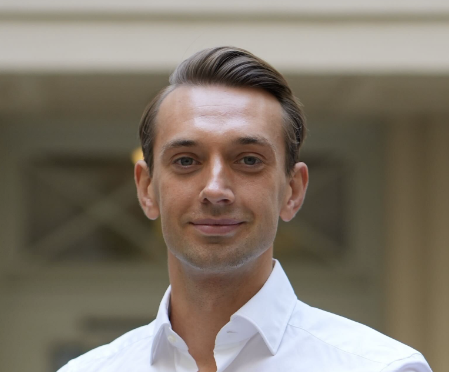
CEO Andrea Cattaneo, Zenith Energy
Zenith Energy is heading into what many would describe as a defining year. As you look at 2026, what are the most important priorities for the company right now?
2026 is, in my view, the most important year in Zenith’s history so far. I do not say that lightly. The reason is not that we depend on a single event, but that several years of work are now converging into visible milestones across the business.
The immediate priority is execution on three fronts. First, the ICSID arbitration against Tunisia, where the final hearings in April 2026 are the central legal milestone. Second, the Italian solar business, where the focus is on moving projects from development into Ready-to-Build status, financing, and physical construction. Third, the uranium projects in Italy, where the objective is to progress through the VIA process and continue advancing what we believe are strategically important assets.
What matters to me is that these are no longer early-stage ideas. We have filed the final submission on the merits in the ICSID case. We have strengthened the arbitration team with additional senior counsel. We have expanded the Italian solar portfolio materially. We have also moved the first 7 MWp portfolio in Puglia into construction-phase activity, with physical construction targeted for July 2026. So the priority is straightforward: remain disciplined, execute properly, and convert groundwork into milestones the market can see.
The ICSID arbitration against Tunisia, involves a claim of USD 572.65 million. Where does the case stand today, and what does the path to a final award look like?
The claim currently stands at USD 572.65 million. That figure reflects the damages assessment that has been put before the tribunal on behalf of our UK subsidiary claimants. In procedural terms, the case is now well advanced. We submitted the final submission on the merits in September 2025, and the final hearings are scheduled for April 2026.
After the hearings, the process moves into tribunal deliberation and, ultimately, the issuance of an award. I do not think it is responsible to be overly precise on timing at this stage. An award in late 2026 would clearly be given. Arbitration of this scale follows its own timetable.
The point I would emphasise is that Zenith is approaching the final phase with a legal team of unusual depth. Publicly, we have announced the participation of Professor Thomas Clay, Maitres Simon Le Wita and Andrea Pinna, and Essex Court Chambers counsel Ben Juratowitch KC and Matthieu Gregoire. That is a serious legal platform, and we believe our case has been prepared on a robust and technically rigorous basis.
What should investors actually expect from the final hearings in April 2026, and how should they think about what happens after that?
The April hearing is the stage at which the tribunal hears the full case in person. That includes legal argument, witness testimony, expert evidence, and the parties’ responses to each other’s positions. It is therefore a very important milestone, but I would still encourage investors to think about it in a disciplined way. A final hearing is not the same thing as a final award. It is the last major substantive step before deliberation.
Our objective is clear. We need to present the record coherently, defend the merits of the claim forcefully, and leave the tribunal with no ambiguity as to both the conduct at issue and the scale of the damage suffered by our claimants. I have said publicly that we approach the hearings with well-grounded optimism, and that remains my position.
At the same time, I prefer transparency over theatrics. The hearing itself is not the end of the process. What matters is the quality of the case presentation, the quality of the evidence, and then the tribunal’s timetable after the hearing has concluded.
You have described Zenith as a company in transformation. How do you think about the balance between the different parts of the business today and going forward?
I see Zenith today as a company with several distinct value centres, each at a different stage of maturity. The arbitration is potentially the largest single crystallisation of value. The Italian solar platform is our industrial growth business in a major European market. The re-activation of the Sant’Andrea gas concession gives us direct producing exposure to Italian gas. Uranium assets gives us longer-duration strategic optionality in a part of the energy and critical-raw-material chain that Europe is beginning to treat much more seriously.
I do not think these businesses need to mature on the same day to create shareholder value. In fact, I think the opposite is true. Solar can progress through permitting, financing, selective monetisation, and retained ownership of producing assets. Gas can contribute operating exposure. Uranium can move through permitting and technical work. The arbitration follows its own legal timetable. That staggered maturity profile can be a strength, provided management remains disciplined and capital allocation remains rational.
So when I speak about transformation, I am not referring to a vague narrative. I mean a company moving from a simpler structure into one with multiple value drivers, several of which are now entering more visible stages.
Your Italian solar portfolio has increased materially, and the latest public announcement put the pipeline at approximately 163.5 MWp. How do you get from pipeline to real value creation?
The first point is that our strategy is deliberate. We are not trying to accumulate random megawatts on paper. We are building regional clusters in areas where irradiation, grid logic, development conditions, and economics make sense, particularly in Puglia, Piedmont, and Lazio. After the acquisitions announced on 13 March 2026, the portfolio stood at approximately 163.5 MWp, which brings us materially closer to our stated objective of exceeding 200 MWp by the end of 2026.
The second point is that value creation does not stop at assembling the pipeline. The next steps are to move projects toward Ready-to-Build status, structure financing, monetise selected assets where that crystallises value, and construct the projects we want to retain in production. Publicly, we have already said that our first 7 MWp portfolio in Puglia has moved into construction-phase activity, with physical construction targeted for July 2026. That is an important transition because it shows the platform moving from development to execution.
Third, development-stage assets can already carry meaningful value before construction starts. In December 2025, we disclosed an independent valuation of EUR 27.5 million for a 110.5 MWp portfolio at RTB stage. Since then, the portfolio has grown further and an updated valuation has been commissioned. So I think it is important that investors understand the difference between a superficial pipeline number and a pipeline that is being advanced through measurable development milestones.