
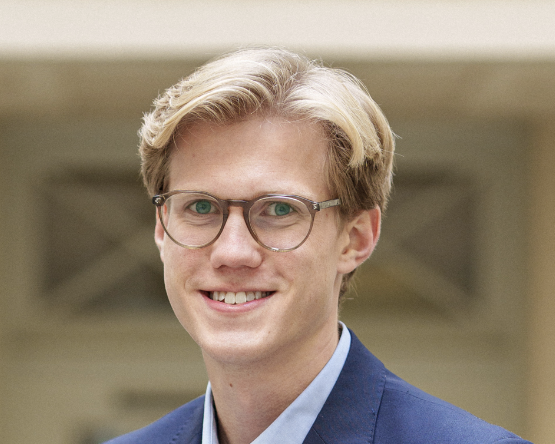

"The underlying megatrends are very compelling for us and clearly support long-term market potential. We have a strong balance sheet, which gives us valuable flexibility to make investments that we believe are strategically important."
CEO Alexander Rosenlew, Orthex
For those who may not be familiar with Orthex – could you briefly describe the company and what you do?
Orthex is a household products company that develops, produces, markets, and sells practical solutions for everyday life in the home. Our core focus today is on storage products of all kinds. Many consumers are familiar with our SmartStore brand, for example the transparent storage boxes with black clips, which is one of our key product families.
We are a company with long roots. Our kitchenware business was founded as early as 1914, and our two plastic factories originate from two different companies: Hammarplast, founded in 1947, and Orthex in Finland, founded in 1956. Since then, the company has gone through a significant transformation. Over the past 15 years in particular. Orthex has evolved into something quite different by combining deep know-how in production with a very thorough understanding of consumers and their needs and preferences.
Could you elaborate more on your different segments and what sets you apart from competitors?
We operate in three main segments, or categories, which are quite self-evident. The largest one is storage, which today represents around 70 % of our sales. Storage for us covers everything from organizing items at home, in the garage, solutions for both small and large belongings – essentially products that make everyday life more organized.
We currently offer what we believe is the most usable and versatile modular storage range in the world, combined with a level of quality that often surpasses what else is available on the market. We are also one of the few players that sell a full concept rather than just individual products. We act as a category partner to retailers, supporting category growth by contributing consumer insight, knowledge about shelf organization, and guidance on when and what types of new products should be introduced. As we continue our expansion in Europe, our clear ambition is to become the number one storage player in the region. Storage is the main growth driver outside the Nordic countries, where our position is already extremely strong.
The second segment is kitchen products, accounting for roughly 20 % of our sales. Our ambition here is simple: if we can help the home chef succeed, then our products are doing their job. We aim to be a safe, tested, and sustainable option for consumers, offering products that are not made in the far east and not produced using hazardous materials. Product safety is extremely important to us. Our kitchen range focuses primarily on food preparation and food storage rather than tableware. We do not produce plates, forks, or knives, but instead food storage boxes, baking utensils, and practical tools used when cooking. This category is very much about the “doing” in the kitchen, where functionality matters most. One of our factories is dedicated to producing kitchen products, both in plastics and in metal.
The third category consists of more traditional household plastic products such as flower pots, mailboxes, bins, and buckets. These are primarily Nordic products, where we operate close to the retailers. In terms of reported sales this category stands for approximately 10 % globally.
What truly sets us apart from competitors starts with quality. We do not produce single-use items. Our products are designed to be used repeatedly over time, and many of them come with a ten-year guarantee. This level of durability clearly differentiates us from many alternatives in the same categories.
The second key differentiator is sustainability. Our ambition is to be a forerunner in the industry, which means investing heavily in the development of new, more sustainable raw materials. Over the years, we have used wood-based materials, sugar cane, castor oil, cooking oil, and other alternative sources to produce plastics more sustainably. This work is highly motivating for our employees and, in many cases, also beneficial for the business. One example is our buckets made from recycled fishing nets that would otherwise have ended up in the ocean. Through a partner that collects, cleans, and processes the nets into pellets, we are able to manufacture new products. This initiative opened doors to new customers and allowed us to sell a broader assortment.
Finally, we take a holistic view of category management. In our industry, competition often focuses solely on product and price, whereas we focus on the entire category. We do not just sell a box – we sell a complete concept. We support retailers in building shelves that maximize value, which typically leads to a strong and good cooporation. In addition, the plastics we use are recyclable, and we actively aim to take back recycled material at the end of a product’s life cycle and use it to manufacture new products, further strengthening our sustainability model.
Your growth outside the Nordic region is reaching your long-term targets. What concrete initiatives are you pursuing to continue your expansion in the rest of Europe, and how do you view the market potential in the coming years?
The underlying megatrends are very compelling for us and clearly support long-term market potential. Urbanisation continues across Europe, household sizes are getting smaller, yet the total number of households is increasing. Every household needs a basic set of functional household products, and people are also moving more frequently, which increases the need for storage solutions.
In addition, we are seeing more flooding across parts of Europe. That makes cardboard boxes a very poor solution for storing valuable items in basements, whereas plastic storage products are becoming the preferred material for long-term storage. Plastic is lightweight, durable, and cost-efficient, and in many situations simply a much more practical alternative. In general terms, there are many structural factors that make our product categories increasingly relevant.
From a market perspective, we have already reached a very strong position in the Nordic region, where the total market size is around €500 million. This has given us valuable experience and learning about what works and what does not. However, growing in the Nordics is very different from growing in the rest of Europe. If you look at the major European markets, the total market size can reach up to €8 billion. In the Nordic countries, our market share ranges from roughly 20 % to 40 %, depending on the country and customer, whereas in the main European markets our current market share is still only around 2–3 % at most. This means there is significant room for growth. We believe many consumers deserve high quality products and not only the cheapest private-label alternatives. What we also see very clearly is that once consumers try our products, they tend to come back. For example, data from platforms like Amazon shows that our repurchase rate is significantly higher than that of comparable brands. Even if our products are priced slightly higher, the quality leads to continued purchasing and strong brand loyalty. This gives us confidence in the long-term potential. The key challenge and focus going forward is execution, getting the go-to-market model right and organising ourselves in a way that convinces retailers to carry our products, both in physical stores and in their online assortments.
In your annual report, you describe how the market is driven by urbanisation, smaller living spaces, and an increased focus on sustainable consumption. How do these structural trends influence Orthex’s long-term growth opportunities and product strategy?
This is fundamentally a stable and steadily growing market rather than a fast-growing or entirely new one. Storage products have been around for as long as people have needed to store their belongings, so we are not entering a booming new category. Instead, we are making our mark in a very established market, which requires patience and the ability to convince both consumers and retailers before gaining a strong foothold. With that said, the long-term structural trends are clearly in place. As people move into smaller living spaces, organisation becomes increasingly important. If you want to fit everything into a smaller home, your belongings need to be well organised and easy to access. This directly influences our product strategy. One concrete example is our increased focus on vertical storage solutions and on helping consumers make the most of limited space. This can apply to everything from the entrance of a home to small drawers in a bathroom cabinets. The need to optimise space runs throughout the entire home, and practical well-designed storage solutions become essential in enabling people to live comfortably in smaller spaces.
Orthex has a low level of indebtedness. How do you plan to use your financial flexibility going forward in terms of investments, innovation, capacity, or potential acquisitions?
We have a strong balance sheet, which gives us valuable flexibility to make investments that we believe are strategically important. Historically, a significant part of our investments has gone into increasing production capacity, particularly during the growth period around the COVID years. Today, our factories are well equipped in terms of capacity, which puts us in a good position to grow volumes further and leverage the fixed cost base we already have. Growth is a key priority for us, and new products play an important role in achieving that. As a result, a meaningful share of our investments continues to go into product innovation and development. At the same time, we are actively looking at the European market, which is still relatively fragmented. We see opportunities for acquisitions that could strengthen our footprint on the European mainland, bring us closer to customers, and position us in markets and regions with higher growth potential.
You are running several research projects within recycled and bio-based materials while also targeting carbon-neutral production by year 2030. How do you see these initiatives strengthening your competitiveness and profitability? What investments and capital allocation decisions are required to achieve both the sustainability goals and continued growth?
I strongly believe that using resources in the most efficient way possible is a competitive advantage. If we consume less electricity, minimise production scrap, and work long term on solutions that require less energy, this naturally leads to lower costs. From a strategic perspective, being a sustainable company can therefore also mean good business. For us, these initiatives are attractive not only because they benefit the environment, but also because they positively impact employee morale. People want to work for a company that actively aims to reduce its environmental footprint and continuously improve. Hand in hand with that comes the opportunity to be more profitable over time.
Perhaps even more importantly, sustainability gives consumers the opportunity to choose products that are better for the environment. Within our categories, there is a wide range of alternatives available, and for some consumers it matters to be able to trust that a product meets high standards in terms of product safety and environmental performance. Product safety is of course fundamental, but environmental considerations are increasingly important as well, and this combination gives us a clear advantage. At the same time, consumers are not always willing to pay a premium solely because a product is more sustainable. For us, this means that sustainability is less about pricing power and more about how we choose to operate as a company and what kind of standards we want to set for ourselves.
Why do you think Orthex is an attractive investment today?
We are on the brink of starting a fairly extensive European growth journey. We already have our own organisations in place in key markets such as Germany, the UK, France and the Benelux region, and we are looking to expand that further. We have been present in the market for some time, and I think we have succeeded in opening doors with many of the large pan-European retailers. That being said, we are still at an early stage. We may have a few products listed in their assortments, but we are not necessarily in all their stores, and not in all the markets where these retailers operate. So I would say that the we’ve completed the first step of landing these interesting customers, and now it is time to accelerate growth across Europe.
Opportunity to speed up growth through potential M&A in Europe. This opportunity is supported by what I would describe as a solid track record. We have been able to perform well both during tough market conditions and during easier times. Over the past years, despite very low consumer confidence, we have still managed to deliver good results. That should give investors some confidence in the stability of the business and in investing in Orthex. We are not a bubble that disappears when it is no longer trendy to buy what we offer. Our products are relevant and remain relevant over time. They are everyday staples, and they are not very expensive, which means that almost everyone can afford them. As a result, you do not see dramatic shifts in demand. Growth is more about how well we execute, how well our teams function, and how well we sell and convince our customers and I believe we are on a good track there.
Valuation of the sector. As a CEO, I do not want to comment too much on stock prices, but more generally I can observe that valuations in the consumer goods sector are currently quite cautious, and the same applies to smaller companies. The question I would ask as an investor is how long this negative sentiment toward the entire sector will last. There may well be a cyclical element at play, where valuations across many consumer goods companies are being pushed very low. That is something I would personally reflect on as an investor.
The megatrends that support our business are still there, and they have not gone away. If you are a long-term investor, I think it is natural to look at the company’s ability to survive and remain relevant over a long period of time. When you see stable businesses supported by long-term structural trends, that can be a good reason to consider investing. Some investors also value dividends. For certain people, dividend taxation can be more attractive than other forms of income. We pay a relatively stable dividend, and at the same time we still have enough financial capacity to invest in growth. Dividend payments are not a problem for us, and our balance sheet does not limit our ability to continue developing the company.
Finally, from a personal perspective, I have been with Orthex for quite a long time. During my tenure, sales have increased roughly eightfold, and I would be very disappointed if we were not able to continue growing going forward.